Copper vs. PVC vs. PE Piping for Malaysian Homes
Choosing replacement pipes? Compare copper, PVC, and PE on durability, cost, and local suitability so you pick the right material.
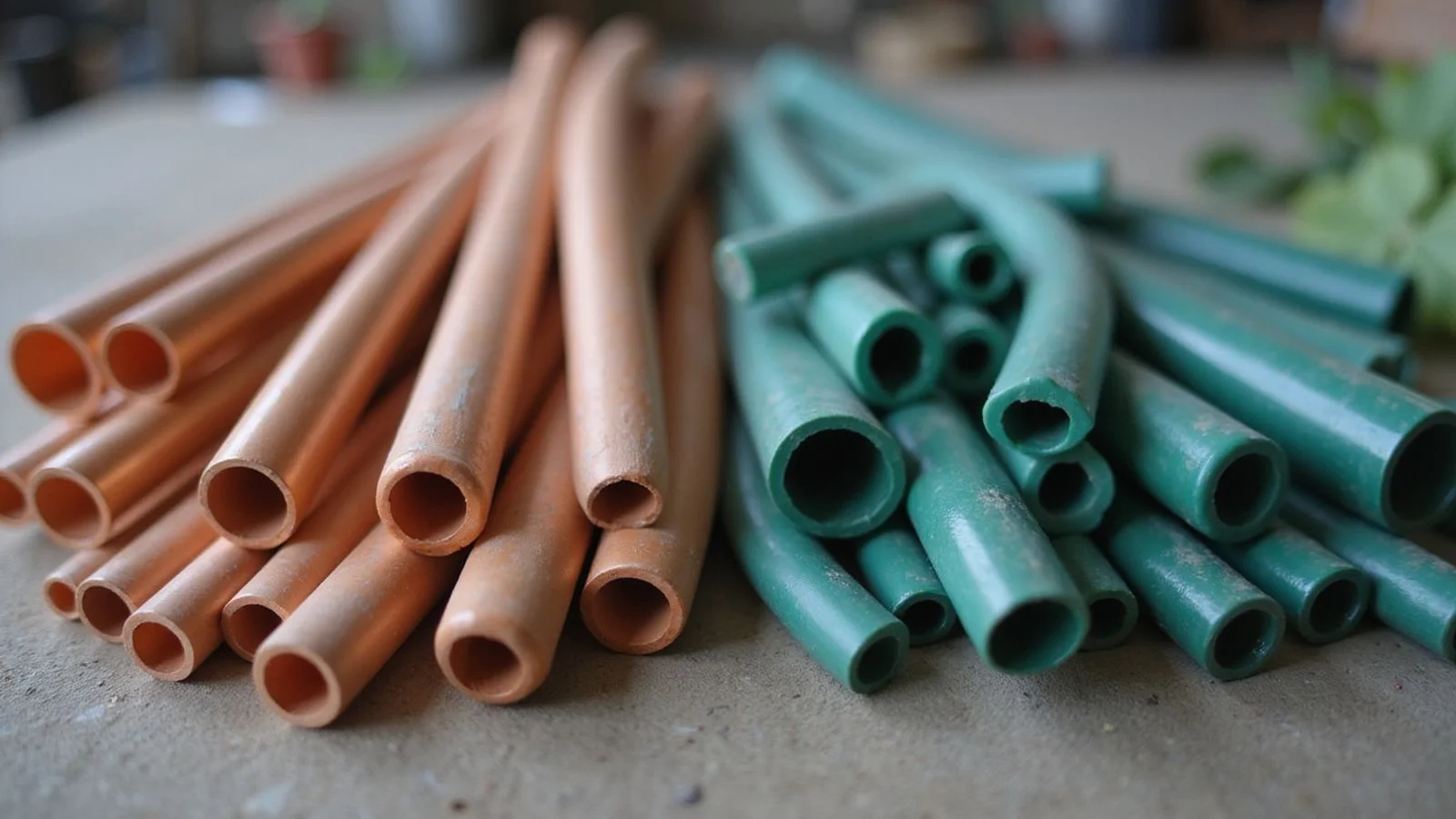
Replacing the plumbing in an older property often forces owners to make a crucial decision about materials. We regularly see properties in Puchong where decades-old pipes are failing, leading to severe leaks and water damage. Finding the best pipe material Malaysia has to offer requires understanding the unique chemistry of our local water supply.
Our team has handled hundreds of these repiping jobs. The choice of material drastically impacts your project costs, system longevity, and future repair bills.
Let us break down the three most common plumbing pipe types and share exactly how they perform in local homes.
Copper
The traditional supply material still holds a strong reputation. Plumbers understand it perfectly. Matching fittings are available at any local hardware shop.
Pros:
- 40 to 50-year expected life when installed in normal conditions.
- Does not degrade in sunlight or ambient heat.
- Can be soldered and joined cleanly.
- Compatible with most existing fittings in older homes.
Cons:
- Most expensive of the three options available today.
- Pinhole corrosion eventually develops from local water chemistry.
- Soldering requires skilled work, and bad joints will fail.
- High theft risk on accessible outdoor runs due to scrap value.
Insider Perspective:
We often encounter pinhole leaks in older residential copper systems. The treated water from suppliers like Air Selangor contains chlorine and specific pH levels. These chemicals react with the metal over decades to cause pitting. High global commodity prices in 2026 also make copper highly cost-prohibitive for a full-house repipe. If you must use it for repairs, always specify Type L copper. Its thicker walls resist corrosion far better than the thinner Type M variant.
Best for: Long-term installations where lifespan matters, premium projects, and matching existing copper systems.
PVC / uPVC
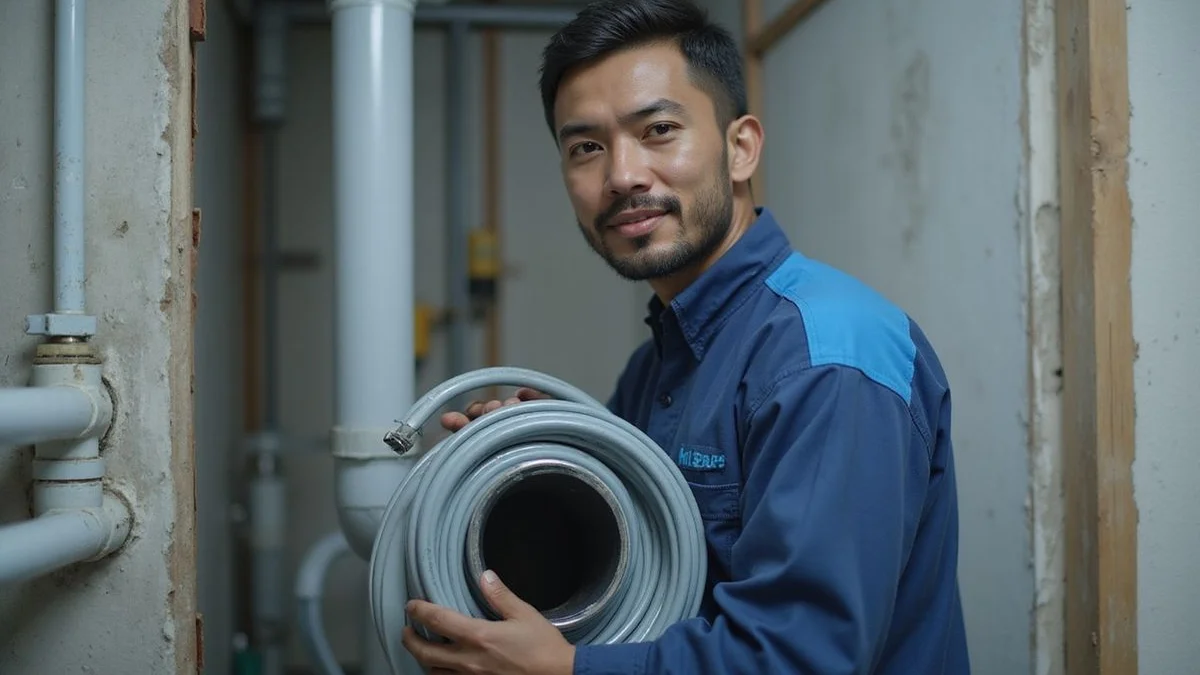
The everyday workhorse for cold-water supply handles a massive portion of local plumbing needs. It is equally effective for drainage and waste.
Pros:
- Highly inexpensive compared to metal alternatives.
- Easy to cut, glue, and install quickly.
- Very common, meaning replacement parts are everywhere.
- Does not corrode or react to local water chemistry.
- Excellent for drainage and cold-water supply lines.
Cons:
- Not suitable for hot water because it deforms above 60°C.
- Becomes brittle when impacted, especially as the material ages.
- UV exposure degrades the plastic, making it unsuitable for unprotected outdoor runs.
- Solvent-cement joints depend entirely on the skill of the installer.
Pro Tips for Malaysian Homes:
Our crews always verify that PVC supply pipes carry the SIRIM certification for the MS 628 standard. This specific standard ensures the unplasticised pipe is rated safely for potable water. A frequent failure point we fix involves DIY repairs using cheap solvent cement. You must use a proper primer and high-quality cement on Class D or Class E pressure pipes. This step prevents joint blowouts under municipal water pressure.
Best for: Cold-water supply lines, drainage, waste pipes, indoor runs.
PE (Polyethylene)
The increasingly popular choice for modern home repipes includes both PEX and HDPE. Finding the best pipe material Malaysia has available often leads property managers straight to these advanced plastics.
Pros:
- Highly flexible, allowing routing around corners with fewer fittings.
- Completely resistant to scale, corrosion, and local water chemistries.
- Long expected life of 30 to 50 years.
- Works perfectly for cold and hot water, with PEX explicitly rated for high temperatures.
- Fewer joints mean significantly fewer potential leak points.
Cons:
- More expensive than standard PVC.
- Requires specialised crimping or expansion tools and fittings.
- UV exposure degrades the material rapidly, so it must stay protected from sunlight.
- Newer in the local market, resulting in fewer traditional installers experienced with the system.
Modern Installation Insights:
We rely heavily on HDPE for the main incoming water line from the local meter to the house. It handles ground movement and high pressure exceptionally well. Inside the home, PEX tubing shines because it uses a manifold delivery system. This method runs a dedicated, continuous line directly to each fixture. It eliminates hidden wall joints completely.
Best for: Full-house repipes, hot-water supply, long routed runs, modern renovations.
How to Choose
Evaluating the options requires looking at your exact situation. Let us break down the decision by use case, budget, and context.
By Application
When evaluating copper vs pvc pipe for hot water, the choice becomes clear very quickly.
| Application | Best Choice | Key Advantage |
|---|---|---|
| Hot-water supply | Copper or PEX | Handles high thermal stress |
| Cold-water supply | PVC, PE, or copper | Cost-effective scaling |
| Drainage / waste | PVC | Large diameter availability |
| Outdoor / exposed runs | Copper (with insulation) or PE inside conduit | UV and impact resistance |
| Underfloor heating | PEX | Maximum flexibility |
| Incoming mains | HDPE | Withstands ground movement |
By Budget
Comparing pe pipe vs pvc reveals a stark difference in upfront costs and long-term value.
- Tight budget: PVC for cold supply, PVC for drainage. This keeps material costs to a bare minimum.
- Mid budget: PE for full supply, PVC for drainage. This offers the best balance of leak prevention and affordability.
- Premium / long-life: Copper for hot supply, PE for cold supply. This hybrid approach maximises durability in high-stress zones.
By Installation Context
- Spot repair: Match the existing pipe material strictly. Mixing metals or using mismatched fittings often accelerates galvanic corrosion or causes joint failures.
- Full repipe: Pick based on your long-term living plans. If you plan to stay in the property for another 20 years, investing in a continuous PEX system prevents future disruptions.
What We Use
Our experts recommend a strategic combination of materials for most residential repipes in Puchong.
- PE for the bulk of the supply runs (flexible, durable, fewer joints).
- Copper at hot-water heater feeds and high-stress points.
- PVC for drainage and cold-water short runs.
This balance delivers the longevity of modern plastics while keeping the proven track record of metal where it matters most.
Our approach ensures a reliable system that fits a realistic household budget.
For the repair-vs-repipe decision, see the dedicated guide. Knowing the condition of your current setup is the critical first step. For pricing and a clear recommendation, book an inspection.
Making Your Final Decision
Selecting the best pipe material Malaysia has to offer comes down to your specific property layout. Every home requires a slightly different configuration to achieve maximum reliability.
This choice dictates your future maintenance needs.
We encourage property owners to inspect their exposed pipes annually for early warning signs like green oxidation or brittle plastic. Catching a small issue early saves thousands of Ringgit in water damage repairs.
Contact our team today to schedule a comprehensive assessment of your plumbing system.
Related Service
Pipe Repair & Leak Detection
We find and fix hidden leaks, burst pipes, and slab leaks using non-destructive acoustic and thermal detection.
Learn About This Service