Grease Traps for Puchong F&B Shops: Care & Cleaning
Grease traps keep F&B drains flowing and compliant. Learn the basics, the right cleaning frequency, and commercial service in Puchong.
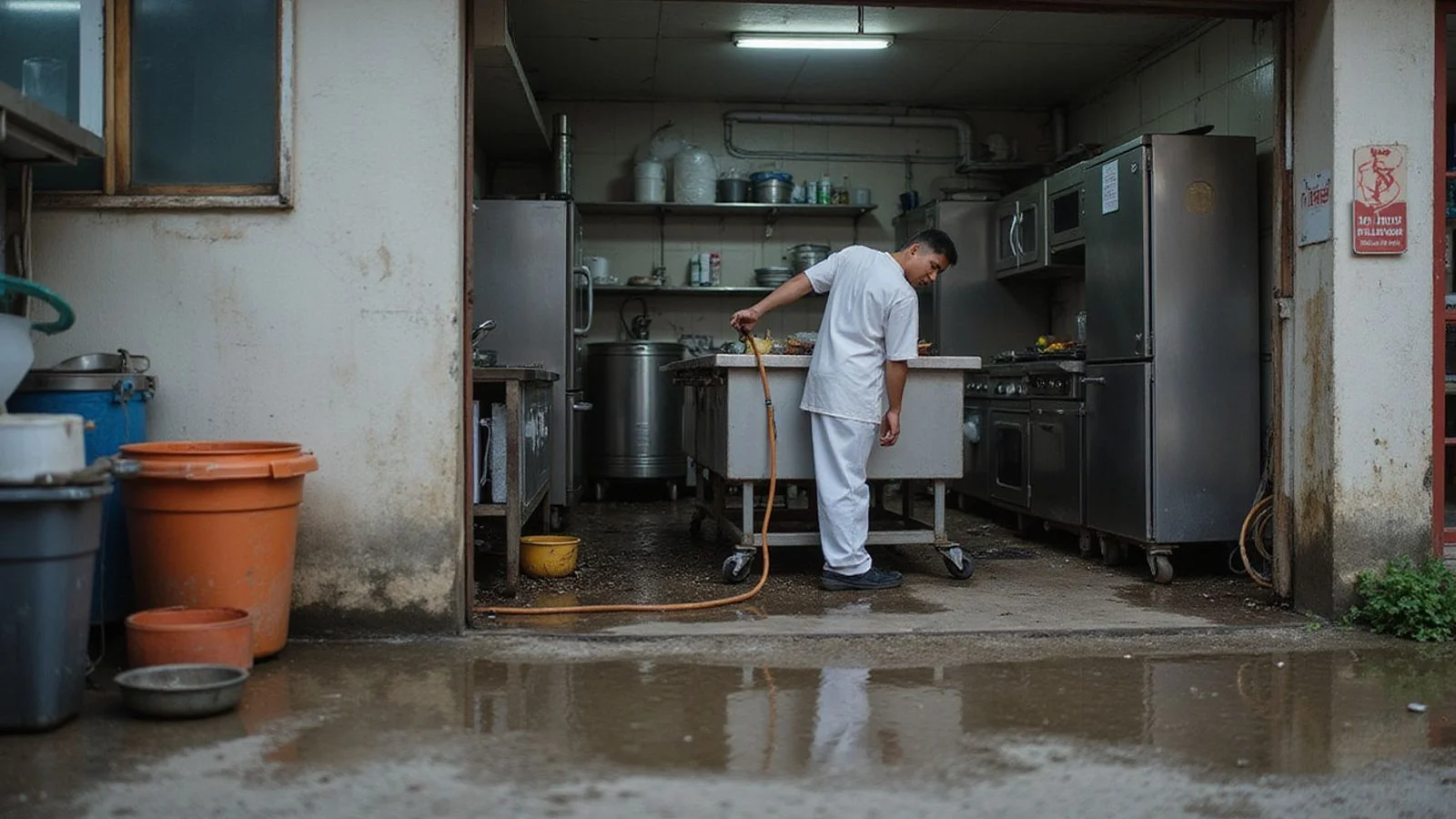
We see every day that the commercial grease trap behind your kitchen is the most critical piece of plumbing in your Puchong F&B outlet. It is also the most frequently ignored component until an emergency strikes. When it fails, the downstream drain blocks and the kitchen sinks quickly back up.
Our team responds to this exact nightmare scenario weekly across local restaurants. Foul smells begin rising from the floor traps, forcing you to close for cleanup right in the middle of a dinner rush.
Routine attention prevents this entire costly disruption.
We will walk you through exactly how these systems work and what proper maintenance looks like for local compliance. Let’s look at the data and explore practical ways to respond.
What a Grease Trap Does
A grease trap sits directly between your kitchen drains and the main sewer line to intercept kitchen waste. Its primary job is to slow down wastewater flow long enough for fats, oils, and grease (FOG) to separate and float to the surface. Solid food particles then settle to the bottom of the tank.
Our experience shows that this simple gravity separation is highly effective when the tank is clean. Clear water in the middle layer flows out safely to the public sewer. Without this interceptor, all that grease would cool, solidify in the downstream pipes, and cause severe blockages.
The physical unit is typically a concrete tank for large outdoor interceptors or a 50-gallon stainless steel box for under-sink setups. Internal baffles create a slow-flow zone to encourage separation. Routine cleaning must happen to remove the accumulated grease and solids before they bypass the baffles entirely.
What “Periodic” Means
The right cleaning frequency depends heavily on your daily cooking volume and the specific cuisine you serve. Fried-food and high-fat operations naturally produce more grease than a simple café.
Our technicians always evaluate the trap capacity and the condition of the internal baffles. Older traps with damaged baffles hold grease less effectively and require more frequent servicing. The industry standard metric for scheduling is the 25 percent rule.
This strict guideline states that a trap is considered completely full when the floating FOG and bottom solids account for a quarter of the total liquid depth. Once waste exceeds this 25 percent threshold, the trap loses its ability to separate new grease.
Typical schedules for Puchong F&B operations:
| Operation Type | Cleaning Frequency |
|---|---|
| Busy fried-food / high-grease kitchen | Every 1-2 months |
| Standard restaurant / café | Every 2-3 months |
| Low-volume kiosk | Every 3-6 months |
| Light-duty bakery, drink shop | Every 6 months |
We strongly advise over-servicing rather than under-servicing your system. The cost of a scheduled clean is dramatically lower than the emergency cost of a downstream blockage and lost revenue.
Signs Your Trap Is Overdue
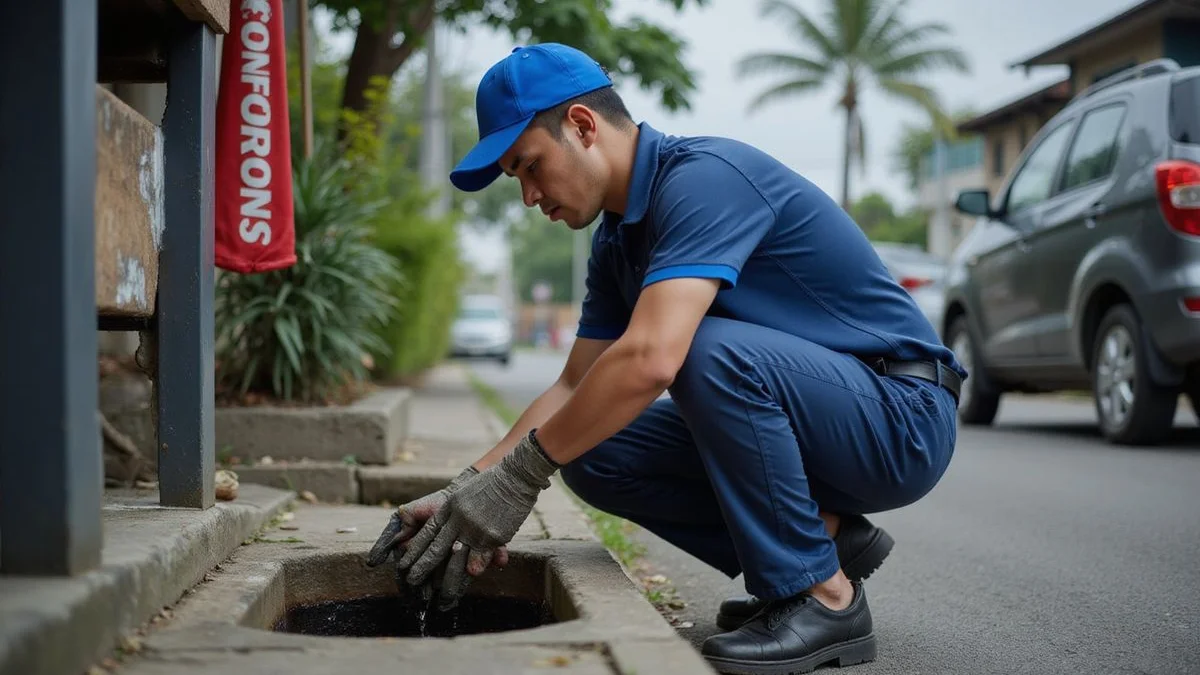
Do not wait for your scheduled service if you notice these warning signs:
- Slow drainage from your kitchen sinks.
- Smells coming from the trap area or nearby floor drains.
- Visible grease accumulating in the trap inlet or outlet pipes.
- Downstream blockages in lines you have already cleared recently.
Our teams frequently receive emergency calls when these issues are ignored. These are all clear indicators the trap is completely full and grease is passing directly through to the sewer.
A common insider tip is to monitor how fast the grease layer returns after a manual skimming. If a thick layer of FOG reforms within just a few days, your internal baffles are likely damaged or the entire tank needs a deep scrape.
What a Proper Cleaning Involves
A real grease-trap clean goes far beyond simply skimming the top layer of floating oil. Proper maintenance physically extracts all waste and resets the entire system to restore full separation capacity.
Our service protocol ensures every component is thoroughly addressed during a visit.
- Pump out the trap contents completely using specialized vacuum equipment.
- Scrape down the baffles and walls to remove hardened grease deposits.
- Remove settled solids from the tank bottom to restore total liquid volume.
- Inspect the baffles for structural damage, warping, and general ageing.
- Refill with clean water to properly re-establish the necessary trap seal.
- Inspect the downstream line to verify flow and check for bypass issues.
All extracted waste is removed for proper disposal at licensed facilities. We always ensure waste is never poured illegally down a public sewer or into a nearby river. Many modern kitchens also pair this mechanical cleaning with a daily bio-enzyme treatment to help break down residual grease between services.
Compliance Considerations
Selangor F&B premises operate under strict council and SPAN expectations regarding commercial grease management. The Water Services Industry (Prohibited Effluent) Regulations 2021 specifically caps Oil and Grease (O&G) discharge at 50 mg/L.
Our compliance experts track local enforcement trends closely across the Klang Valley. The Majlis Bandaraya Subang Jaya (MBSJ) actively inspects restaurants in areas like Taman Perindustrian Puchong Utama, checking for specific operational failures:
- Missing or completely unmaintained grease interceptors.
- Evidence of illegal waste dumping into public drains.
- Lack of up-to-date professional cleaning records.
Establishments committing these violations frequently receive Grade D ratings and mandatory 14-day closure orders.
Keeping accurate routine cleaning records for your own files is an essential business practice. We can provide detailed service records and waste disposal manifests upon request to satisfy local health inspectors.
Pairing with Hydro Jetting
Where grease has been passing through a poorly maintained trap for months, the downstream line itself becomes heavily coated. Cleaning the trap alone will not fix the slow drainage because the pipe diameter is physically restricted by hardened fat.
Our specialized crews use high-pressure water to resolve this specific complication. The line must be cleared using water pressure exceeding 3,000 PSI to strip the buildup from the pipe walls.
We combine standard grease-trap service with hydro jetting of the downstream line for these severe cases. This complete approach ensures the entire plumbing system is fully reset and protected against immediate re-clogging — see how hydro jetting clears stubborn blockages for the full breakdown.
Booking
For F&B premises in Pusat Bandar Puchong, Bandar Puteri, Puchong Jaya, and surrounding areas, scheduled professional help is readily available. Finding a reliable contractor prevents compliance failures and costly emergency shutdowns.
Our local teams offer both scheduled preventative maintenance and on-demand grease trap cleaning services. You can learn more about our comprehensive commercial solutions by visiting our drainage and clog cleaning page.
We invite you to WhatsApp us directly to set up a regular maintenance schedule that fits your exact kitchen volume. Start protecting your business infrastructure today.
Related Service
Drainage & Clog Cleaning
We clear blocked drains, floor traps, grease traps, and main sewer lines using snaking and high-pressure hydro jetting.
Learn About This Service